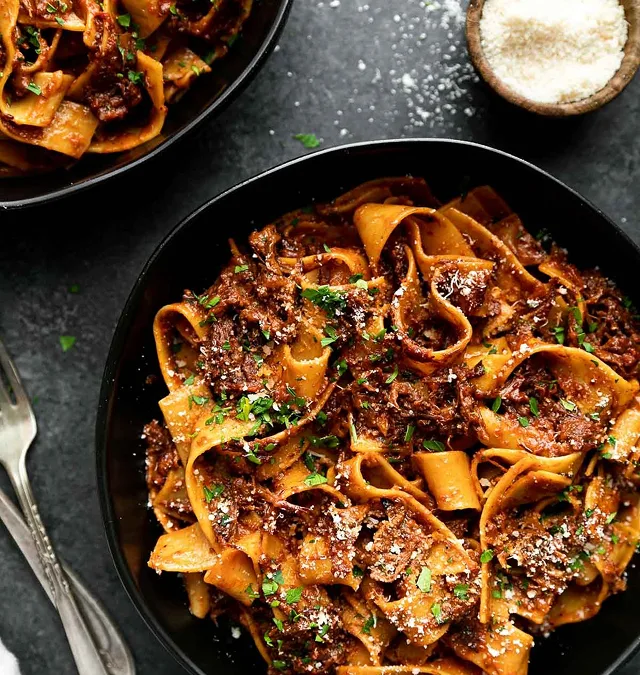
Italy has hundreds of pasta shapes, and almost every one of them exists for a reason. A ridge, a hollow, a curl or a wide flat surface changes how a sauce clings, how each mouthful feels and which dish a region became famous for. Italians take this seriously: ask a Roman to serve carbonara on farfalle and you will get a look. Here is our simple guide to the most loved Italian pasta shapes, and the sauces they were made for.
The golden rule: match the shape to the sauce
You do not need to memorise every pairing. Most of it comes down to a few simple rules:
- Long and thin (spaghetti, linguine): smooth sauces that coat every strand, such as olive oil and garlic, light tomato or seafood.
- Long and wide (pappardelle, tagliatelle): rich, slow-cooked ragù and creamy sauces that need a broad surface to hold on to.
- Tubes (rigatoni, paccheri, penne): chunky sauces that get trapped inside, plus baked dishes.
- Ridges (anything “rigate”): the grooves grip the sauce, so they suit thicker, heartier sauces.
- Twists and small shapes (fusilli, orecchiette): pesto, vegetables and sauces with small pieces that catch in the curves.
Paccheri
Paccheri are big, smooth tubes from Campania, the region around Naples. The name is often linked to the Neapolitan word for a slap, supposedly for the sound they make when tossed in sauce. Because they are so wide, each piece fills with sauce, which makes paccheri perfect for chunky tomato sauces, seafood and rich, creamy sauces.
At CAVO: our most-loved pasta, the Spicy Paccheri alla Vodka, with tomato sugo, vodka, creamy stracciatella, fried basil and roasted red peppers.
Rigatoni
Rigatoni are short, wide tubes with ridges on the outside (the name comes from rigato, meaning ridged). They are a Roman favourite and the classic shape for the city’s great sauces, like amatriciana, gricia and carbonara. The ridges and the hollow centre make rigatoni ideal for meaty, spicy and creamy sauces, and they hold up beautifully when baked.
At CAVO: the Nduja Rigatoni, with spicy pork sausage from Calabria, bacon, cream, wild rucola and parmesan.
Pappardelle
Pappardelle are wide, flat ribbons from Tuscany, and the name comes from the Tuscan verb pappare, to gobble up. Traditionally they are served with slow-cooked game ragù, like wild boar or hare, or with mushrooms. The wide surface carries a rich, meaty sauce in every forkful.
At CAVO: Lamb Ragù Pappardelle, with slow-cooked lamb ragù, Napoli sauce, parmesan and rucola.
Spaghetti
The most famous shape of all. Long, round and thin, spaghetti love sauces that coat rather than chunk: olive oil and garlic, simple tomato, clams, carbonara or cacio e pepe. One thing Italians will tell you: the classic partner for a Bolognese-style meat ragù is actually tagliatelle, not spaghetti.
At CAVO: Gamberi Spaghetti Aglio-Olio, with king prawns, cherry tomatoes, black and green olives, olive oil, chilli flakes and white wine.
More shapes worth knowing
- Tagliatelle: flat egg ribbons from Emilia-Romagna, the traditional match for ragù alla bolognese.
- Linguine: flattened spaghetti from Liguria, made for pesto and seafood, especially clams.
- Bucatini: thick spaghetti with a hole through the middle, a Roman classic with amatriciana.
- Penne: angled tubes, famous in arrabbiata and penne alla vodka.
- Fusilli: spirals that trap pesto and light sauces in their twists.
- Orecchiette: “little ears” from Puglia, traditionally served with broccoli rabe (cime di rapa) and sausage.
- Tonnarelli: square-edged egg spaghetti, the Roman choice for cacio e pepe.
Quick pasta pairing cheat sheet
| Sauce | Best shapes |
|---|---|
| Olive oil, garlic & chilli | Spaghetti, linguine |
| Seafood | Linguine, spaghetti, paccheri |
| Light tomato | Spaghetti, penne |
| Creamy or vodka sauce | Paccheri, penne, rigatoni |
| Meat or game ragù | Pappardelle, tagliatelle, rigatoni |
| Pesto | Linguine, fusilli |
| Roman classics (carbonara, amatriciana, gricia) | Rigatoni, spaghetti, bucatini |
How Italians cook pasta: four tips
- Salt the water well. It is the only chance to season the pasta itself.
- Skip the oil in the water. It stops the sauce from sticking to the pasta.
- Cook it al dente. The pasta should still have a little bite, as it finishes cooking in the sauce.
- Finish it in the pan. Toss the pasta through the sauce with a splash of starchy pasta water, so it turns glossy and clings to every piece.
Try them at CAVO, Uluwatu’s pizza and pasta bar
At CAVO Bar & Bistro on Jl. Labuansait in Pecatu, our pasta menu is short on purpose: four shapes, four sauces, each one paired the way it should be, from family recipes. All our pasta is fresh pasta, and gluten-free pasta is available on request for any dish.
Start with an Italian aperitivo, share a plate of pasta and an oval Roman-style pizza, and pair it all with a glass of Italian wine. See the full food menu, then book a table on WhatsApp at +62 813 2830 088. Walk-ins are always welcome.
Italian pasta FAQs
What is the difference between paccheri and rigatoni?
Both are tubes, but paccheri are much wider and usually smooth, while rigatoni are narrower with ridges on the outside. Paccheri fill up with sauce and suit seafood and creamy sauces; rigatoni grip thick meat and tomato sauces.
What sauce goes with pappardelle?
Rich, slow-cooked sauces: meat or game ragù such as lamb, beef or wild boar, or a creamy mushroom sauce. The wide ribbons carry a hearty sauce in every bite.
Why do some pasta shapes have ridges?
Ridges (rigate) give the sauce more surface to cling to, which makes ridged shapes a good match for thicker, chunkier sauces.
Where can I eat Italian pasta in Uluwatu?
CAVO Bar & Bistro on Jl. Labuansait, Pecatu serves fresh pasta from family recipes, including Spicy Paccheri alla Vodka, Nduja Rigatoni, Lamb Ragù Pappardelle and Gamberi Spaghetti, with gluten-free pasta available on request.