

Uluwatu is warm all year, but the weather still shapes your trip: when the surf is best, when the beaches are calmest, when it rains and when it gets busy. Here is our local guide to Uluwatu weather by month and the best time to visit, from people who live on the Bukit year-round.
The best time to visit Uluwatu
The best time to visit Uluwatu is from May to September, in the dry season, when days are sunny, rain is rare and the surf is at its most consistent. April and October are great shoulder months, with mostly dry weather and fewer crowds. The wet season, from November to March, brings short, heavy tropical downpours, usually in the afternoon or overnight, but also greener landscapes, quieter beaches and some of the most dramatic sunsets of the year.
Uluwatu weather by month
| Month | Avg temperature | Rainfall | Days with rain | Sea temperature | Sunset (15th) |
|---|---|---|---|---|---|
| January | 27°C | 265 mm | 19 | 29°C | 6:46 PM |
| February | 27°C | 210 mm | 18 | 29°C | 6:45 PM |
| March | 27°C | 190 mm | 18 | 29°C | 6:33 PM |
| April | 27°C | 126 mm | 16 | 29°C | 6:16 PM |
| May | 27°C | 76 mm | 14 | 28°C | 6:07 PM |
| June | 26°C | 57 mm | 12 | 27°C | 6:08 PM |
| July | 25°C | 52 mm | 12 | 26°C | 6:15 PM |
| August | 25°C | 38 mm | 10 | 26°C | 6:18 PM |
| September | 25°C | 52 mm | 11 | 26°C | 6:16 PM |
| October | 26°C | 66 mm | 14 | 27°C | 6:14 PM |
| November | 27°C | 147 mm | 16 | 28°C | 6:19 PM |
| December | 27°C | 229 mm | 19 | 29°C | 6:33 PM |
Dry season: April to October
The dry season is Uluwatu at its most classic: blue skies, low humidity, cooler evenings and steady south-east trade winds. Those winds blow offshore on the Bukit’s west-facing reefs, which is why this is peak surf season. August is usually the driest month and the sea is at its coolest, around 26°C. Evenings on the cliffs can feel breezy, so bring a light layer for sunset.
The catch is the crowds. July and August, along with Australian school holidays, are the busiest weeks of the year, so book accommodation early and arrive early at the temple and popular beaches. Our beaches guide has the quieter alternatives.
Wet season: November to March
From November the rain returns, usually as short, heavy downpours in the afternoon or at night rather than all-day rain, with plenty of sunshine in between. December and January are the wettest months. The air is warmer and more humid, the sea is at its warmest at around 29°C, and the hills turn green. Christmas and New Year are very busy despite the rain.
Many surfers also like the wet season on the Bukit, when the wind often shifts and the east-coast breaks can come alive. Beach conditions change more often, so always check before you swim.
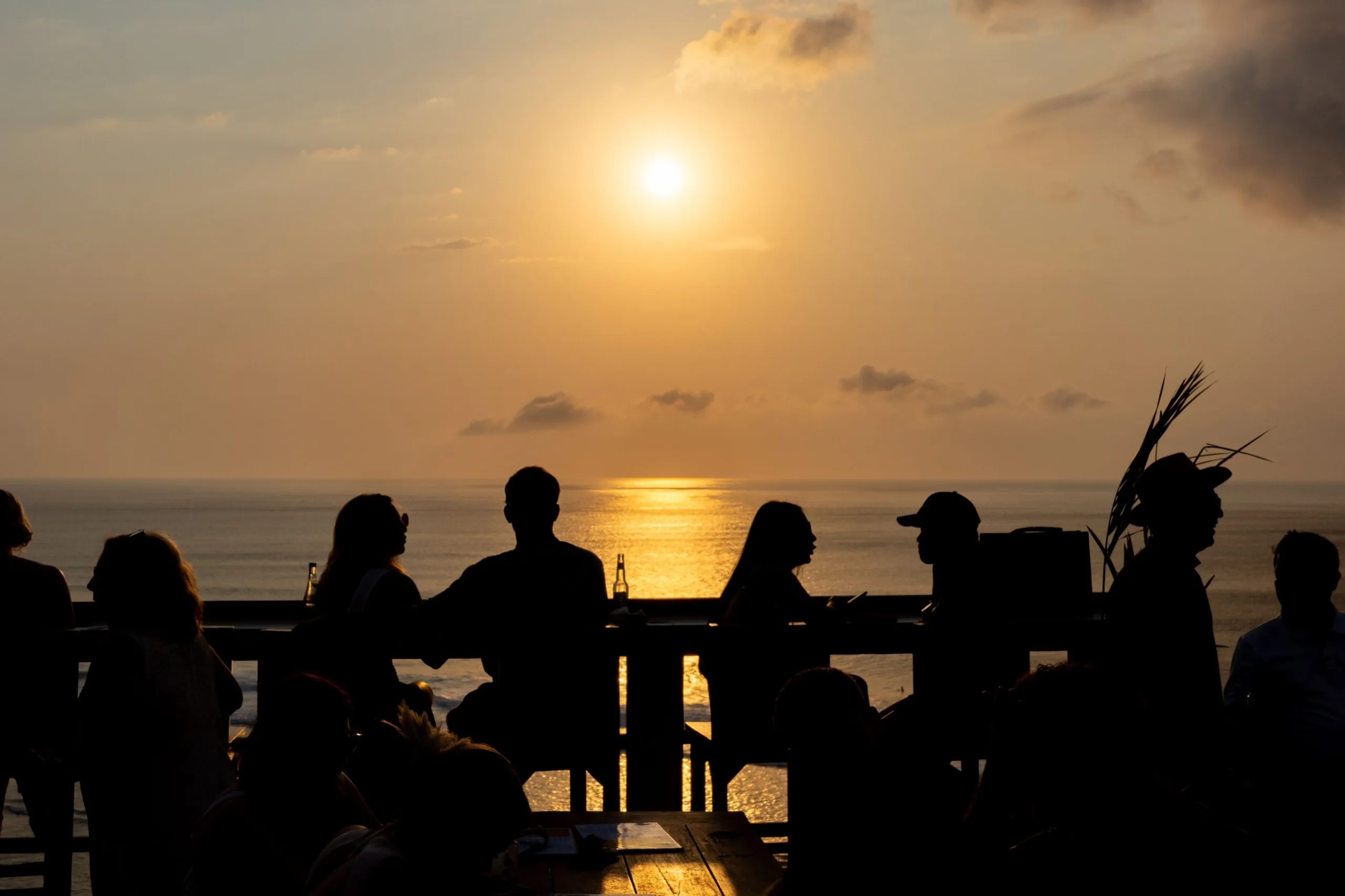
Uluwatu month by month
January to March
Hot, humid and green, with the most rain of the year, often in short afternoon storms. Quieter after the New Year rush and good value. Nyepi, Bali’s Day of Silence, usually falls in March: the whole island, including the airport, shuts down for 24 hours, so check the date before you book.
April to June
The rain eases off and the dry season begins. April and May are among the best months of the year: sunny, warm and calmer than peak season. June brings the first big swells of the surf season.
July to September
Peak dry season and peak season for visitors. Sunny days, cooler nights, the most consistent surf and the busiest beaches. September is a sweet spot as the summer holiday crowds thin out.
October to December
October is still mostly dry and quieter. The first rains arrive in November, and December builds to the wettest, busiest stretch over Christmas and New Year.
What to do in Uluwatu when it rains
Rain in Uluwatu rarely lasts all day, so plan outdoor things for the morning and keep the afternoon flexible. Book a massage, visit the Garuda Wisnu Kencana Cultural Park, or settle in for a long Italian lunch. At CAVO we serve lunch from 12 to 6 PM, Tuesday to Sunday, with house-baked focaccia sandwiches, Roman-style pizza and fresh pasta, followed by aperitivo from 4 to 6 PM every day. See our lunch menu.
What to pack
- Reef-safe sunscreen, a hat and sunglasses: the sun is strong in every season.
- Reef shoes for the rocky entries at Suluban, Bingin and Padang Padang.
- A light rain jacket from November to March.
- A light layer for breezy dry-season evenings on the cliffs.
- A sarong for temple visits (one is also provided at Uluwatu Temple).
Planning your days? See our guide to the best things to do in Uluwatu and the Uluwatu sunset time by month.
Uluwatu weather FAQs
What is the best month to visit Uluwatu?
May, June and September are often the best months: dry, sunny and good for surf, without the peak crowds of July and August. April and October are also excellent shoulder months.
When is the rainy season in Uluwatu?
The rainy season runs from November to March. Rain usually comes as short, heavy afternoon or evening showers rather than all-day rain, and December and January are the wettest months.
Is Uluwatu good to visit in December?
Yes, if you do not mind some rain. December is warm and green with the warmest sea of the year, around 29°C, but it is one of the wettest and busiest months, especially over Christmas and New Year.
How warm is the sea in Uluwatu?
The sea in Uluwatu is warm all year, from around 26°C in July and August to around 29°C from December to April.
When is the surf season in Uluwatu?
The main surf season is the dry season, roughly April to October, when south-east trade winds blow offshore on Uluwatu’s reef breaks and the biggest swells arrive.