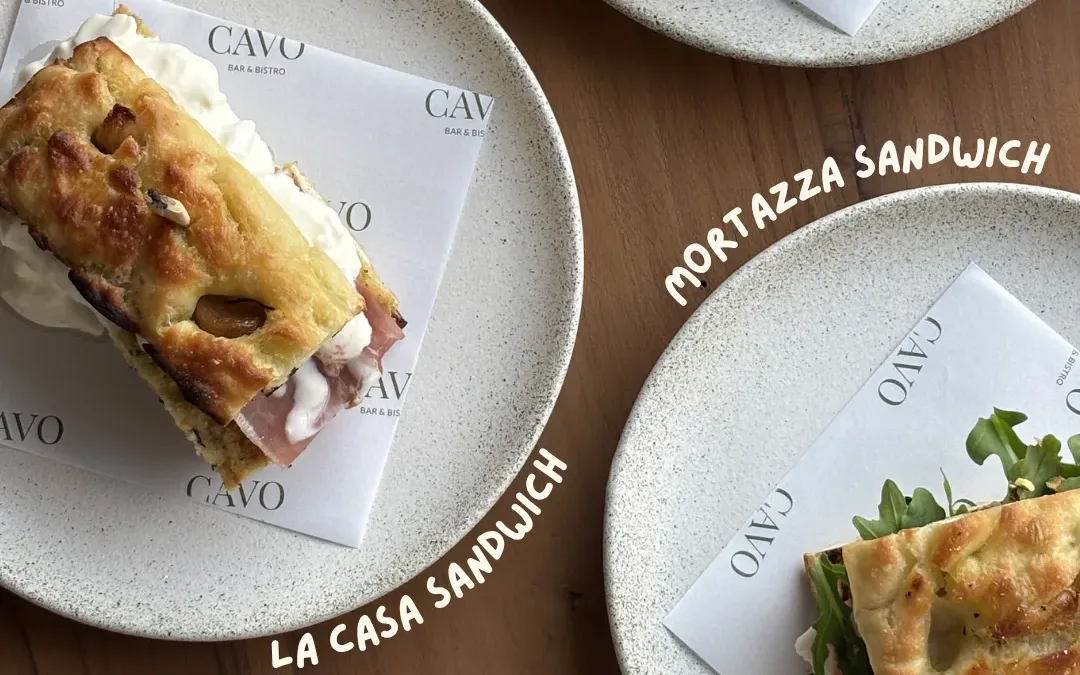
Ask an Italian about focaccia and you will probably get a story about a bakery from their childhood: a warm slab wrapped in paper, olive oil soaking through, eaten on the walk home before it ever reached the kitchen. Focaccia is one of Italy’s oldest and simplest breads, and it is also the bread behind our lunch menu in Uluwatu. Here is our guide to what real Italian focaccia is, how it differs from pizza, and how Italians turn it into a great sandwich.
What is focaccia?
Focaccia is a flat, oven-baked Italian bread made from a simple dough of flour, water, yeast, salt and plenty of extra virgin olive oil. The name comes from the Latin focus, meaning hearth: in ancient Rome, panis focacius was bread baked on the hearth. Today it is most closely linked with Liguria, the coastal region around Genoa, where people eat it at any time of day, even for breakfast.
Good focaccia is crisp and golden on the outside and soft, open and airy inside. Those famous dimples are pressed into the dough with the fingertips before baking, and they catch little pools of olive oil and salt, so every bite is a little different.
Focaccia vs pizza: what is the difference?
They start from similar ingredients, but they are made differently:
- The rise: focaccia dough is pressed into a tray and left to rise again before baking, which makes it thick, soft and bready. Pizza is stretched and baked straight away, so it stays thin.
- The oil: focaccia is generous with olive oil, both in the dough and on top. Pizza uses far less.
- The toppings: focaccia is usually kept simple (salt, rosemary, garlic, olives or tomatoes), while pizza is built around a sauce and cheese.
- How you eat it: focaccia is a bread first, so it is perfect sliced open and filled. Pizza is a meal on its own.
Focaccia across Italy
Every region has its own version. A few worth knowing:
- Focaccia Genovese (Liguria): the classic. Thin-ish, dimpled, glossy with olive oil and finished with coarse salt.
- Focaccia di Recco (Liguria): two paper-thin layers of dough with fresh, tangy cheese melted in between. More like a cheese pie than a bread.
- Focaccia Barese (Puglia): made with potato in the dough for extra softness, and topped with cherry tomatoes, olives and oregano.
- Schiacciata (Tuscany): the Tuscan cousin, flatter and crunchier, and the bread behind Florence’s famous sandwich shops.
What is panuozzo?
Panuozzo is focaccia’s younger, Neapolitan-leaning relative. It was created in 1983 by Giuseppe Mascolo, a pizza maker in Gragnano, a town just outside Naples that is better known as the home of dried pasta. The idea is simple and brilliant: take pizza dough, shape it into a long loaf, bake it in a hot oven until puffed and lightly charred, then slice it open and fill it while it is still warm.
The result sits somewhere between a sandwich and a pizza: crisp on the outside, soft and chewy in the middle, and sturdy enough for generous fillings.
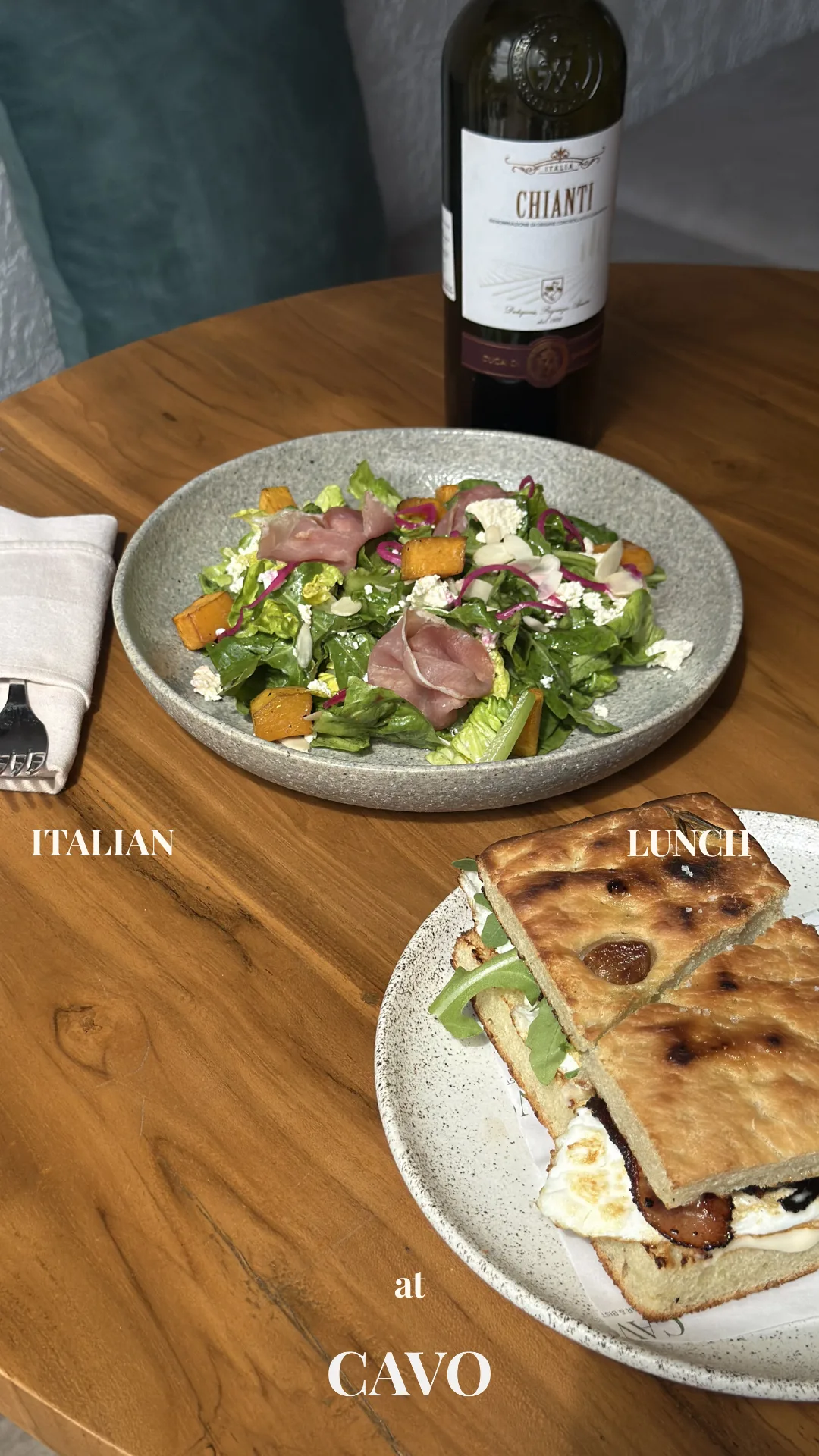
How Italians fill a panino
First, a little Italian lesson: panino means one sandwich, and panini means more than one. And whatever you call it, an Italian sandwich follows a few unwritten rules:
- Great bread first. The bread is the star, not just the packaging.
- Few ingredients, all good ones. Three or four fillings that work together beat ten that fight each other.
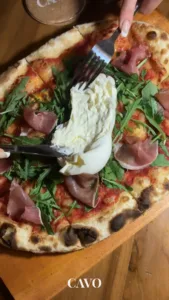
- Fill it generously. Thin slices of cured meat, folded and layered, with something creamy (stracciatella, burrata, ricotta) and something fresh or sharp (rucola, pickles, salsa verde).
- Serve it warm. Bread fresh from the oven makes all the difference.
Focaccia at CAVO in Uluwatu
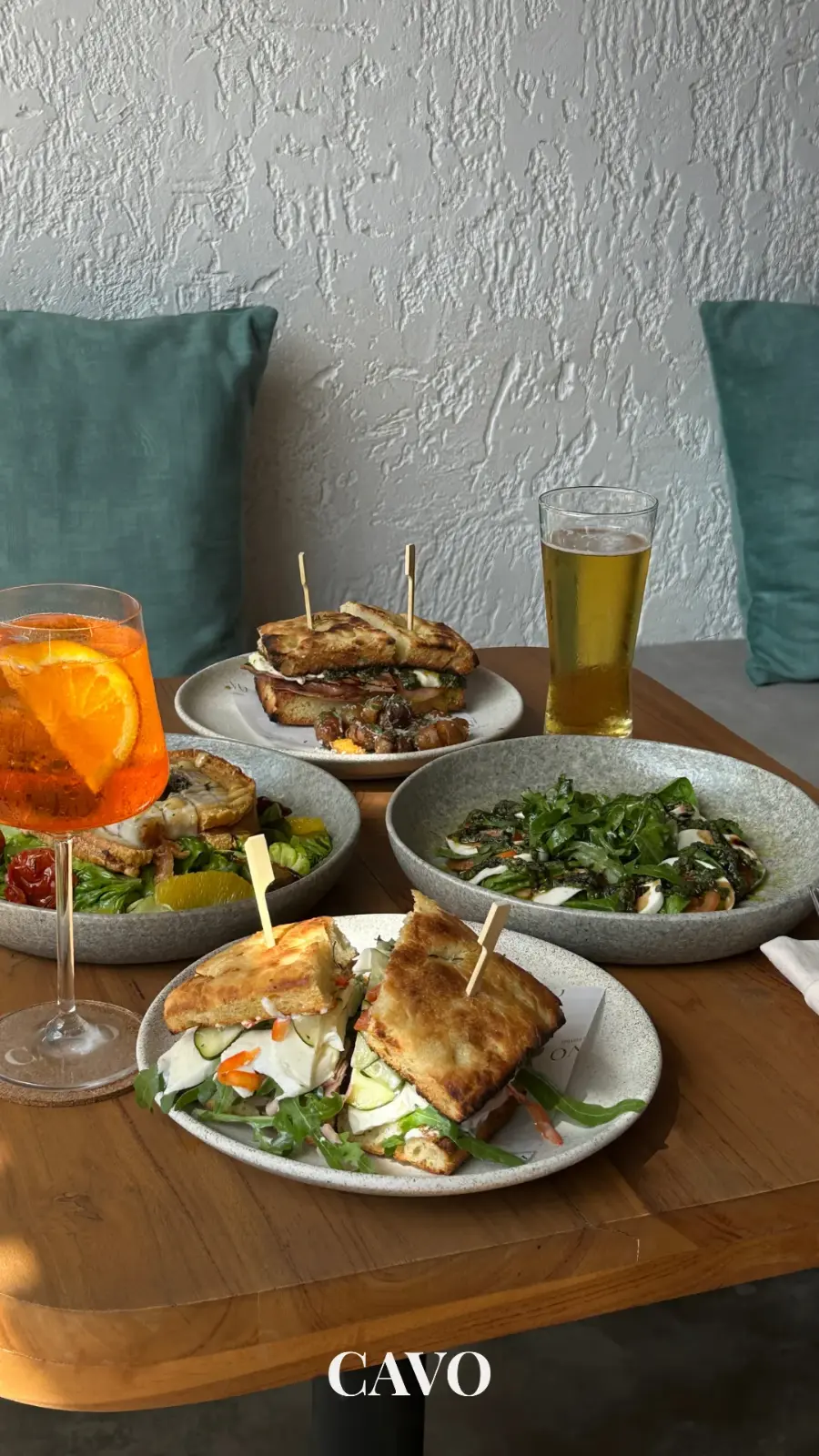
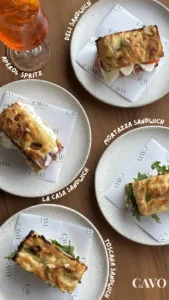
In Italy, a great sandwich is a way of life, so we bake our own focaccia in-house and fill it the way Italians do: simply, generously and with the best ingredients. At lunch you choose your bread first: our house focaccia with rosemary and garlic (light and crunchy), or panuozzo, our pizza dough baked to order and folded (soft, airy and lightly charred). Then pick your filling:
- Mortazza: mortadella, stracciatella, crushed pistachio and rucola.
- La Porchetta: slow-roasted porchetta, pickled cucumber and salsa verde.
- Nonna’s: meatballs, stracciatella, rucola and tomato sugo, from the family recipe.
- Deli: mortadella, salami, fresh mozzarella, lettuce, roasted capsicum, pickles and mayonnaise.
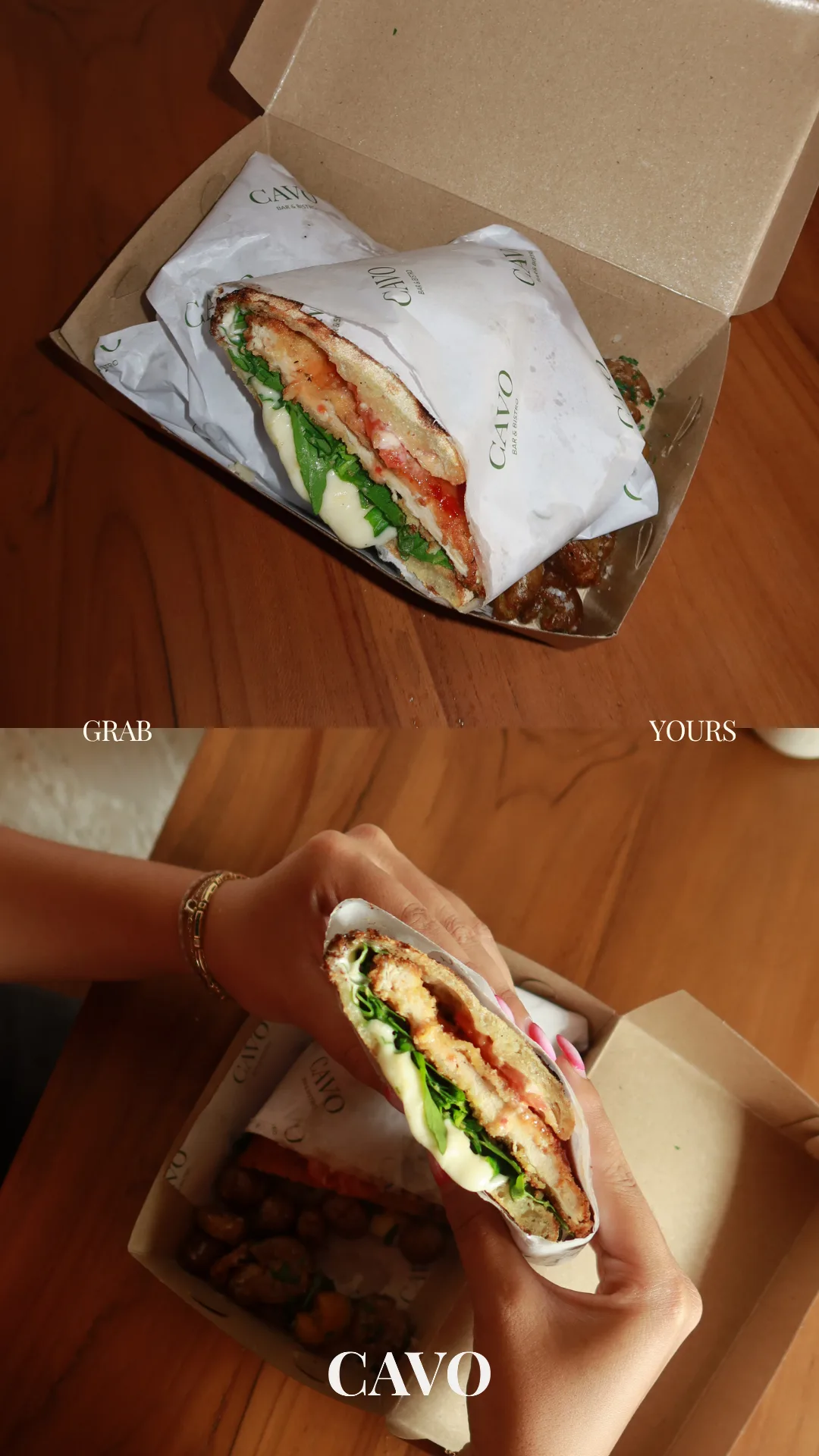
- Calabrian: house-crumbed chicken schnitzel, prosciutto, burrata and vodka sauce.
- La Casa: house-crumbed chicken schnitzel, mozzarella, rucola, tomato, mayonnaise and sweet chilli.
- Toscana (vegetarian): roasted pumpkin, ricotta, pesto, rucola, balsamic and honey.
- B & E: fried eggs, bacon, garlic and lemon aioli and rucola.
Every panini is generously filled and served warm, and everything can be taken away, so a focaccia for the beach at Padang Padang or Bingin is easy: send your order on WhatsApp at +62 813 2830 088 and pick it up on Jl. Labuansait, Pecatu. See the full lunch menu, or browse the food menu for our oval Roman-style pizza and fresh pasta.
Lunch is served from 12 to 6 PM, Tuesday to Sunday, with free Wi-Fi if you are working through lunch. Stay on for an Italian aperitivo from 4 to 6 PM.
Focaccia FAQs
What is the difference between focaccia and pizza?
Focaccia is left to rise in a tray before baking, so it is thicker, softer and richer in olive oil. Pizza is stretched thin and baked straight away, and it is built around sauce and cheese.
What is panuozzo?
Panuozzo is pizza dough shaped into a loaf, baked in a hot oven, then sliced and filled while warm. It was created in 1983 in Gragnano, near Naples.
Is it panino or panini?
In Italian, panino is one sandwich and panini is the plural. Outside Italy, “panini” is often used for one sandwich too.
Where can I get focaccia in Uluwatu?
CAVO Bar & Bistro on Jl. Labuansait, Pecatu bakes its own focaccia in-house and serves generously filled focaccia and panuozzo sandwiches from 12 to 6 PM, Tuesday to Sunday, to eat in or take away.