Walk into any Italian restaurant and you will see the same three names on the menu: mozzarella, burrata and stracciatella. They look alike, they taste alike, and they are all made from the same fresh, milky curd, so it is easy to mix them up. But each one has its own story, texture and best use. Here is our simple guide to burrata vs stracciatella vs mozzarella, plus a few other Italian fresh cheeses worth knowing, and where to find them on our menu in Uluwatu.
Burrata, stracciatella and mozzarella at a glance
| Cheese | What it is | Texture | Best for |
|---|---|---|---|
| Mozzarella | A fresh stretched-curd cheese, shaped into balls | Soft, springy, milky | Pizza, Caprese salad, baking |
| Stracciatella | Shreds of fresh mozzarella soaked in cream | Loose, creamy, spoonable | Spooning over pasta, pizza and sandwiches |
| Burrata | A pouch of mozzarella filled with stracciatella | Firm outside, oozing inside | Served whole with tomatoes or on top of pizza |
What is mozzarella?
Mozzarella is the most famous Italian fresh cheese and the foundation of the other two. It is a pasta filata, or stretched-curd, cheese: the curds are heated, then stretched and kneaded into a smooth, elastic paste before being pulled and cut into balls. The name comes from the southern Italian word mozzare, to cut off, after the way the cheese is cut by hand from the stretched curd.
There are two main types. Mozzarella di bufala is made from water buffalo milk, mostly in Campania, the region around Naples, and is richer and tangier; Mozzarella di Bufala Campana has had protected status in the EU since 1996. Fior di latte, which means flower of the milk, is mozzarella made from cow’s milk. It is milder, a little firmer and melts beautifully, which is why it is the classic choice for pizza.
What is stracciatella?
Stracciatella comes from Puglia, the heel of Italy’s boot. Its name means little shreds: it is made by pulling fresh mozzarella into thin strands and soaking them in rich, fresh cream. The result is loose, silky and spoonable, somewhere between a cheese and a sauce. It is not meant to be sliced; it is meant to be spooned generously over warm pasta, pizza or bread, where it melts into everything around it.
Do not confuse it with stracciatella gelato (vanilla gelato with chocolate shreds) or stracciatella soup (a Roman egg-drop broth). Same idea of little shreds, very different dishes.
What is burrata?
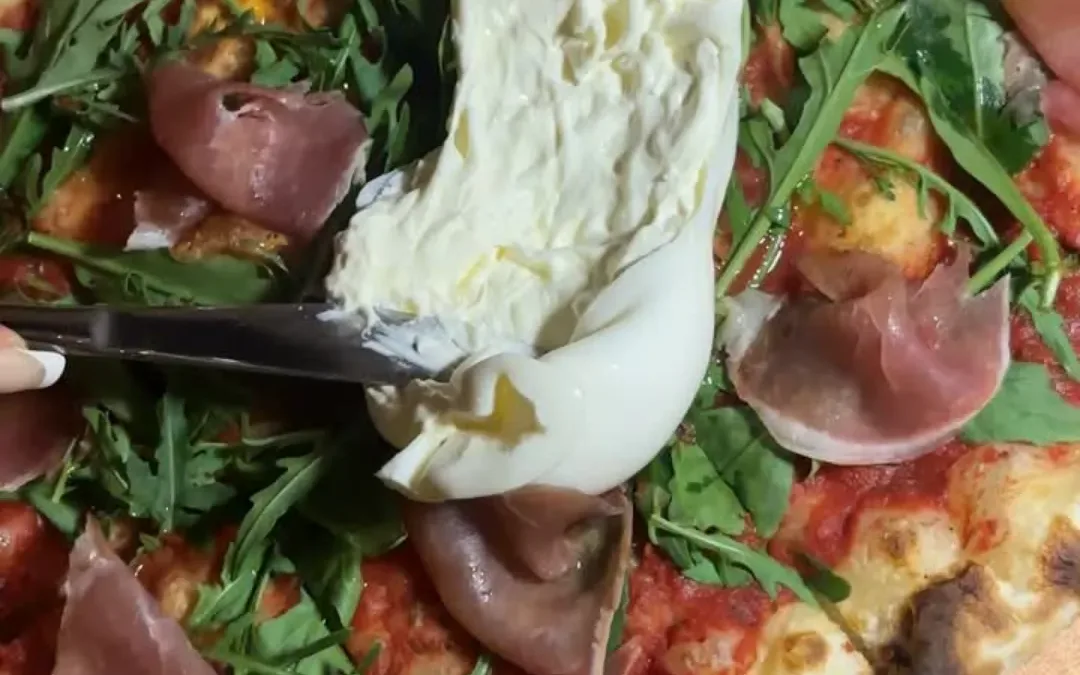
Burrata is mozzarella and stracciatella in one. It was created in Andria, in Puglia, in the early 20th century, reportedly as a clever way to use up the scraps left over from making mozzarella. A thin pouch of fresh mozzarella is filled with stracciatella and cream, then tied closed. Cut into it and the soft, creamy centre spills out. The name comes from burro, Italian for butter, a nod to how rich it is. Burrata di Andria has had protected geographical status since 2016.
Burrata is at its best when it is very fresh, at room temperature, and served simply: torn open over ripe tomatoes with olive oil, salt and basil, or placed whole on top of a hot pizza just before serving, so the warmth softens the cream inside.
Burrata vs mozzarella: what is the difference?
- Structure: mozzarella is solid all the way through; burrata is a mozzarella shell with a soft, creamy filling.
- Richness: burrata is richer and creamier because of the cream inside.
- Cooking: mozzarella is made to melt and bake; burrata is usually served fresh, added at the end.
- Freshness: both are best eaten fresh, but burrata does not keep well at all, so it should be eaten as soon as possible.
Burrata vs stracciatella: what is the difference?
Stracciatella is the filling of burrata. If burrata is a gift, stracciatella is what is inside the wrapping. Choose burrata when you want the drama of cutting it open at the table, and stracciatella when you want that creamy richness spread through a whole dish.
Other Italian fresh cheeses worth knowing
- Ricotta: soft, light and slightly sweet, traditionally made by reheating the whey left over from cheesemaking (the name means recooked). Lovely on pizza with honey, or in pasta and desserts.
- Mascarpone: a rich, thick cream cheese from Lombardy, and the heart of a good tiramisu.
- Bocconcini and ciliegine: small balls of mozzarella, bite-sized and cherry-sized.
Where to try burrata, stracciatella and mozzarella in Uluwatu
Fresh cheese runs right through our menu at CAVO, from family recipes and the dishes we have loved in Italy:
- Burrata e Pomodorini: a whole fresh burrata with marinated cherry tomatoes and basil oil. The classic way to start.
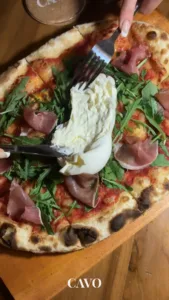
- Crudo e Burrata pizza: our signature oval Roman-style pizza with pomodoro sugo, prosciutto crudo, wild rucola and fresh burrata.
- Spicy Paccheri alla Vodka: our most-loved pasta, finished with creamy stracciatella, fried basil and roasted red peppers.
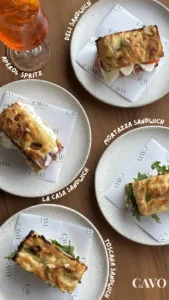
- Mortazza and Nonna’s focaccia: mortadella with stracciatella and crushed pistachio, or Nonna’s meatballs with stracciatella and tomato sugo, on house-baked focaccia.
- Caprese salad and Classic Margherita: fresh mozzarella with tomato and basil, and our Margherita with fior di latte.
- Il Bianca pizza and Nonna’s tiramisu: ricotta with nduja and honey on a white base, and mascarpone in our little kept secret.
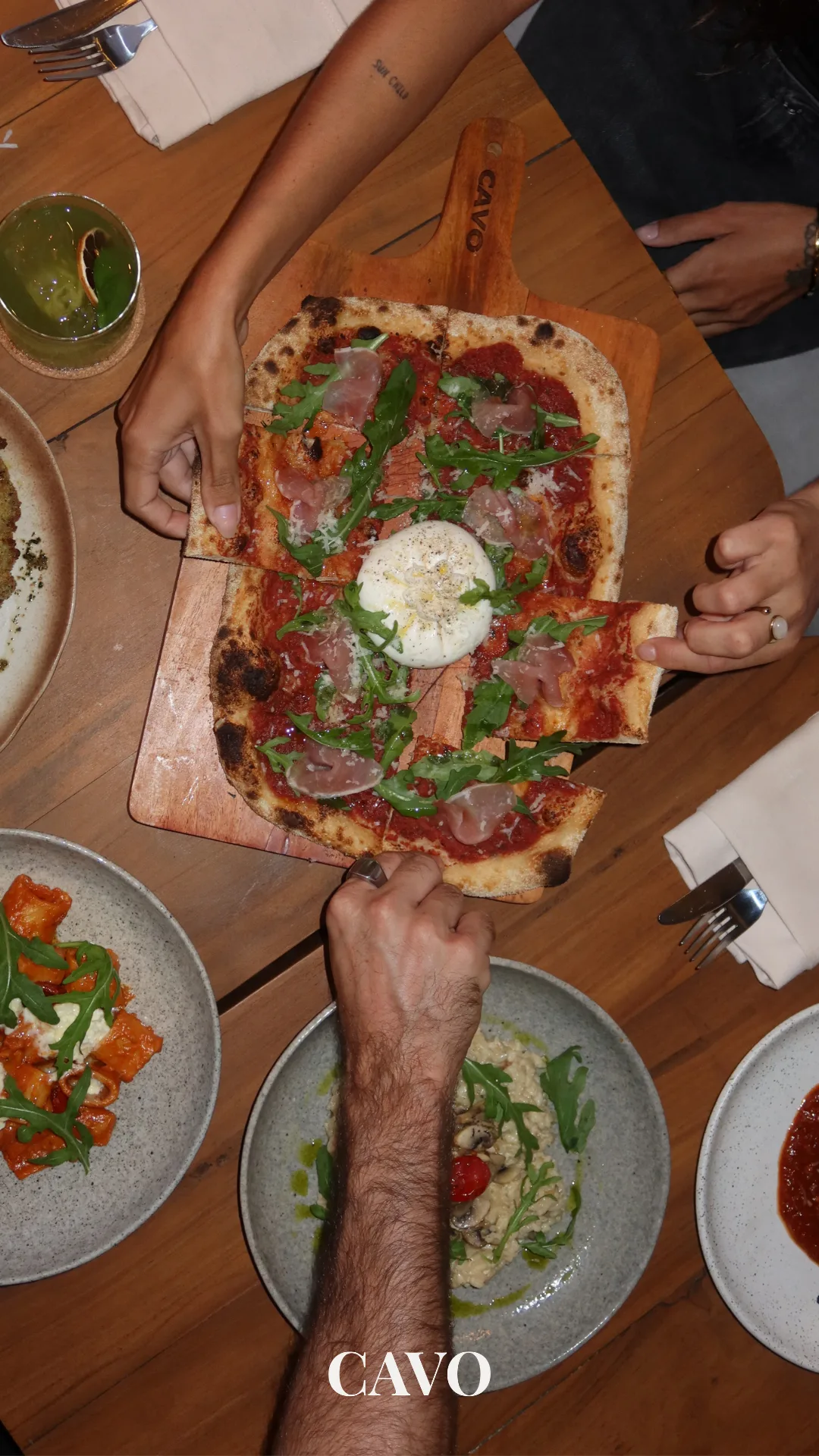
See the full food menu, or come for lunch from 12 PM, Tuesday to Sunday. Walk-ins are welcome, or book a table on WhatsApp at +62 813 2830 088.
Italian fresh cheese FAQs
What is the difference between burrata and mozzarella?
Mozzarella is a solid ball of fresh stretched-curd cheese. Burrata is a thin pouch of mozzarella filled with stracciatella and cream, so it is firm outside and soft and creamy inside.
What is stracciatella cheese?
Stracciatella is a fresh cheese from Puglia made from shreds of mozzarella soaked in cream. It is soft and spoonable, and it is the creamy filling inside burrata.
Where does burrata come from?
Burrata comes from Andria in Puglia, southern Italy, where it was created in the early 20th century. Burrata di Andria has had protected geographical status since 2016.
How do you eat burrata?
Burrata is best eaten very fresh and at room temperature: torn open over tomatoes with olive oil, salt and basil, or placed on top of a hot pizza just before serving.
Where can I eat burrata in Uluwatu?
CAVO Bar & Bistro on Jl. Labuansait, Pecatu serves Burrata e Pomodorini, a Crudo e Burrata Roman-style pizza, and pasta and focaccia sandwiches with stracciatella.