Italians have a talent for drinks that are simple, bittersweet and made to be sipped slowly before dinner. Most classic Italian cocktails use just a few ingredients, and many of them share the same bright red bitter as their base. Here’s our guide to the classic Italian cocktails worth knowing, from the Negroni to the Americano, the Italian wines to drink alongside them, and how to enjoy both at CAVO in Uluwatu.
What makes a cocktail Italian?
Italian cocktails are built around bitters and vermouth. Italian bitters, called amari or bitter, are herbal liqueurs with a bittersweet, orange-peel flavour. Vermouth is a fortified wine flavoured with herbs and spices, and Italy, especially Turin, has been making it for centuries. Put them together and you get drinks that wake up your appetite, which is exactly the point of aperitivo.
The Negroni
Equal parts gin, sweet vermouth and red bitter, stirred over ice with a slice of orange.
The Negroni is the king of Italian cocktails. The story goes that in Florence, around 1919, a certain Count Negroni asked his bartender to make his usual Americano stronger by swapping the soda water for gin. Whether or not every detail is true, the drink stuck. It’s bold, bitter, a little sweet and best sipped slowly.
The Americano
Red bitter and sweet vermouth, topped with soda water.
The Americano is the Negroni’s older, lighter sibling. It goes back to 19th-century Milan, and despite the name, it’s thoroughly Italian. It’s low in alcohol and very refreshing, so it’s perfect for a hot Uluwatu afternoon when you want something with flavour but not too much strength.
The Negroni Sbagliato
Red bitter and sweet vermouth, topped with Prosecco.
Sbagliato means “mistaken” in Italian. Legend says a bartender in Milan reached for sparkling wine instead of gin by accident, and a new classic was born. It’s lighter and fizzier than a Negroni, and a favourite with anyone who loves a spritz.
The Spritz
Prosecco, a bitter aperitivo liqueur and a splash of soda, served over ice with an orange slice.
The spritz comes from the Veneto in northern Italy, and today it’s the drink of aperitivo all over the country. Bright orange, bubbly and easy-drinking, it’s the classic way to start an evening. We’ve written a whole guide to the spritz and the aperitivo ritual in Aperitivo Explained.
More Italian classics to know
- Bellini: white peach purée and Prosecco, from Venice. Soft, fruity and elegant.
- Garibaldi: red bitter with fresh orange juice, named after the hero of Italian unification. Simple and sunny.
- Hugo: Prosecco, elderflower, fresh mint and soda, from the Alps in northern Italy. A lighter, floral alternative to the spritz.
- Limoncello: not a cocktail, but the classic way to finish a meal in southern Italy. A small, ice-cold glass of lemon liqueur after dinner.
Prefer wine? Italian wine for aperitivo and beyond
Not every Italian reaches for a cocktail. Wine is just as much a part of aperitivo, and a glass is often the first thing ordered when friends sit down. Many Italian cocktails are wine-based anyway: the Spritz, Sbagliato, Bellini and Hugo are all built on Prosecco.
Prosecco and Italian sparkling wine
Prosecco comes from the hills of the Veneto, the same region as the Spritz. It’s light, fresh and fruity, with soft bubbles, and it’s the easiest way to start an evening. Italy also makes more serious sparkling wines, called spumante, from regions such as Franciacorta in Lombardy and Trentino in the north.
Crisp Italian whites
On a warm evening, a chilled Italian white is hard to beat. Pinot Grigio is light and easy, Vermentino is fresh and a little salty, like the coast it grows on, and Soave and Gavi are elegant and crisp. All of them go well with salumi, cheese and the snacks of aperitivo.
Rosato and lighter reds
Italian rosé, called rosato, is a great middle ground. And if you love red, try a lighter style slightly chilled: Lambrusco, a lightly sparkling red from Emilia-Romagna, is made to be drunk cool, and it’s the traditional match for cured meats.
Bigger reds for dinner
Save the bigger reds for the meal itself. Sangiovese and Chianti from Tuscany, Montepulciano d’Abruzzo and Sicily’s Nero d’Avola are made for pizza, pasta and grilled meat. (Chianti happens to be a CAVO favourite. More on that below.) Our wine pairing guide explains exactly what to drink with what.
When do Italians drink cocktails and wine?
Italians mostly drink their cocktails before dinner, as part of aperitivo, with a few snacks to share. A Negroni or Americano opens your appetite. Then it’s wine with the meal (see our wine pairing guide), and maybe a digestivo like limoncello to finish. If you want to know more about the order of an Italian meal, read how to order like an Italian.
Italian cocktails and wine at CAVO in Uluwatu
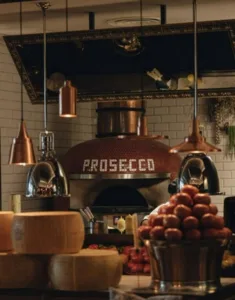
Our bar pours the Italian classics, including the Negroni, the Americano and the Aperol Spritz, alongside white, red and sparkling wine by the glass or bottle, including Prosecco. Not sure what to order? Ask our team what’s open.
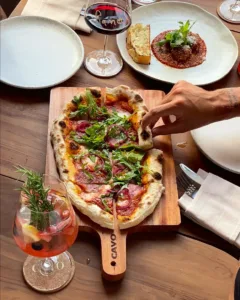
And if you’re a red wine lover, try our Chianti. It’s quickly becoming one of the things CAVO is known for, and guests keep coming back for another bottle. It’s made for our oval Roman-style pizza and a bowl of fresh pasta. The best time to try them is during aperitivo, daily from 4pm to 6pm, the Italian way to ease from afternoon into evening.
On Fridays, stay on for Vinyl & Vino, with funk and disco from 7:30pm and happy hour from 10pm to midnight. And if you’re celebrating New Year’s Eve with us, our bottomless packages include Negroni, Americano and Spritz.
Salute!
CAVO Bar & Bistro
📍 Jl. Labuansait, Pecatu, Uluwatu, Bali
🍹 Aperitivo: daily, 4pm–6pm
🪩 Vinyl & Vino: Fridays from 7:30pm
🕛 Lunch: Tuesday–Sunday, 12pm–6pm
✉️ mitchell@cavobali.com