Uluwatu is one of the most famous surf spots on the planet. Since the early 1970s, surfers have been climbing down through the cave below the cliffs to ride long, perfect left-handers off the reef, and the Bukit Peninsula around it has some of the best waves in Indonesia. This is our guide to surfing Uluwatu: the breaks, the best season and tides, where beginners can start, how to stay safe on the reef, and where to refuel after a session.
Uluwatu surf at a glance
- Wave type: long, powerful left-handers breaking over shallow coral reef.
- Best season: the dry season, roughly April to October, with the biggest and most consistent swells from June to August.
- Best wind: south-east trade winds, which blow offshore on the Bukit’s west coast.
- Level: mostly intermediate to expert. Beginners should start elsewhere, or take a lesson on a small day.
- Crowds: busiest from June to August. April, May, September and October bring good waves with fewer people in the water.
When to surf Uluwatu
Uluwatu works best in the dry season, from about April to October. This is when storms deep in the southern Indian Ocean send long-period swells north to Bali, and the south-east trade winds blow offshore along the Bukit’s west coast, grooming the waves into clean lines. June, July and August usually bring the biggest swells and the biggest crowds. The shoulder months of April, May, September and October are a sweet spot: still plenty of swell, lighter crowds and calmer winds.
In the wet season, from November to March, the wind often swings around to the west and north-west, which can make the Bukit’s west coast messy. That is when Bali’s east-coast breaks come into their own, although Uluwatu still has good mornings, especially early, before the wind picks up. Our guide to Uluwatu weather by month has rainfall, sea temperature and sunset times for every month.
The five breaks at Uluwatu
Uluwatu is not one wave but a series of left-hand reef breaks spread along the cliffs below the temple. Which one is working depends on the size of the swell and the tide.
| Break | Best tide | Swell | Level |
|---|---|---|---|
| Outside Corner | Low to mid | Big swells only | Expert |
| The Peak | Mid to high | Small to medium | Advanced |
| Racetracks | Mid (dangerous at low) | Medium | Advanced |
| Temples | Mid to high | Small to medium | Advanced |
| The Bombie | Any, on giant days | Very big swells only | Big-wave experts |
Outside Corner
The furthest-out section, a long, fast wall that only comes alive on big swells. When it is on, it is one of the most powerful waves in Bali. Strictly for experienced surfers.
The Peak
Right in front of the cave and the main take-off zone, The Peak is the most consistent break at Uluwatu and usually the most crowded. It handles a range of swell sizes and is often at its best from mid to high tide.
Racetracks
Further down the line, Racetracks is a fast, hollow section over very shallow reef. It is at its best on a mid tide and becomes dangerous as the tide drops, when the reef is just below the surface. If you are not sure, do not surf it at low tide.
Temples
Below the temple cliffs to the south, Temples offers fast, hollow lefts and can be good on smaller swells, especially at higher tides. It is usually reached by paddling out from the beach at Suluban.
The Bombie
An outer reef that only breaks on very large swells, producing giant waves well out to sea. It is a big-wave spot for experts with proper safety back-up, and something most people will happily watch from the cliffs.
Getting in and out: the Uluwatu cave
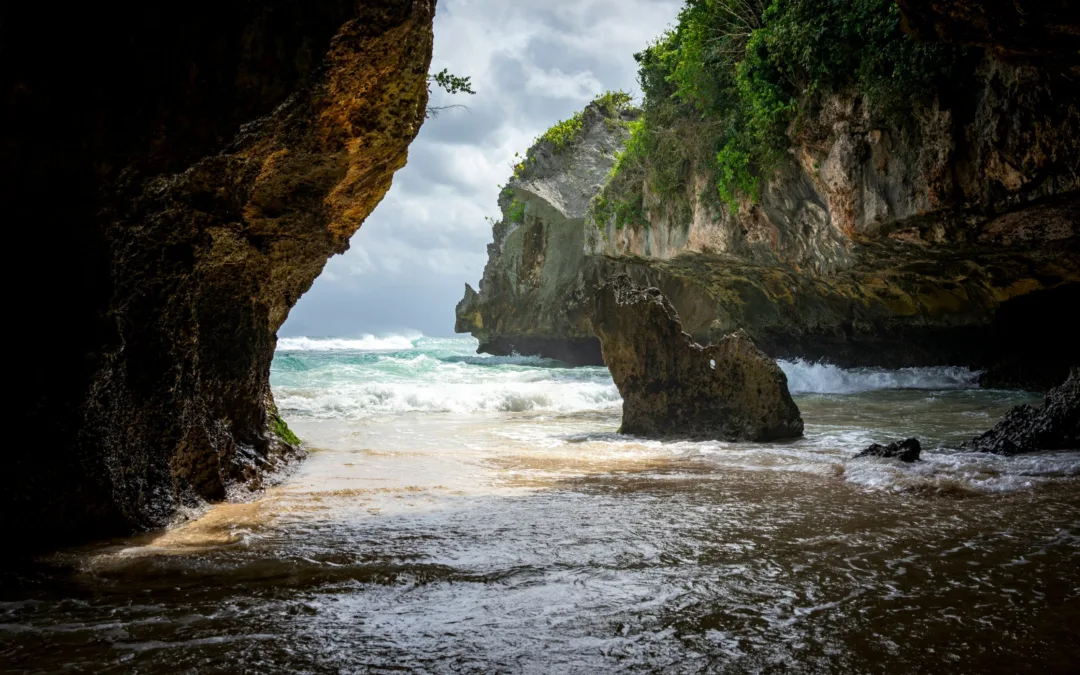
Part of the Uluwatu experience is the paddle-out. From the clifftop bars, a staircase leads down to the cave at Suluban Beach. At higher tides the water comes right into the cave and you can paddle straight out; at low tide you will need to walk over sharp reef first, so reef booties help. Coming back in is the tricky part: currents and backwash can push you past the cave, so watch where other surfers come in before you paddle out. If you miss it, you will have a long paddle around. Our Uluwatu beaches guide covers Suluban and the other beaches nearby.
More surf spots on the Bukit
Uluwatu is the most famous wave on the Bukit Peninsula, but within a few minutes’ drive there are plenty more, most of them reef-break lefts.
- Padang Padang: a heavy, hollow barrel over very shallow reef that only breaks properly on big swells. One of the most famous waves in the world, and strictly for experts. The softer inside section on smaller days is a different story.
- Bingin: a short, perfect barrelling left below the cliffside warungs. Crowded with skilled surfers and shallow at lower tides.
- Impossibles: long, fast walls between Bingin and Padang Padang, with several peaks. For confident intermediates and above.
- Dreamland: a punchy peak with lefts and rights in front of a sandy beach. Watch out for the strong shore break.
- Balangan: a long, rippable left. Good for intermediates on medium days, and small, high-tide days can suit improving surfers.
Can beginners surf in Uluwatu?
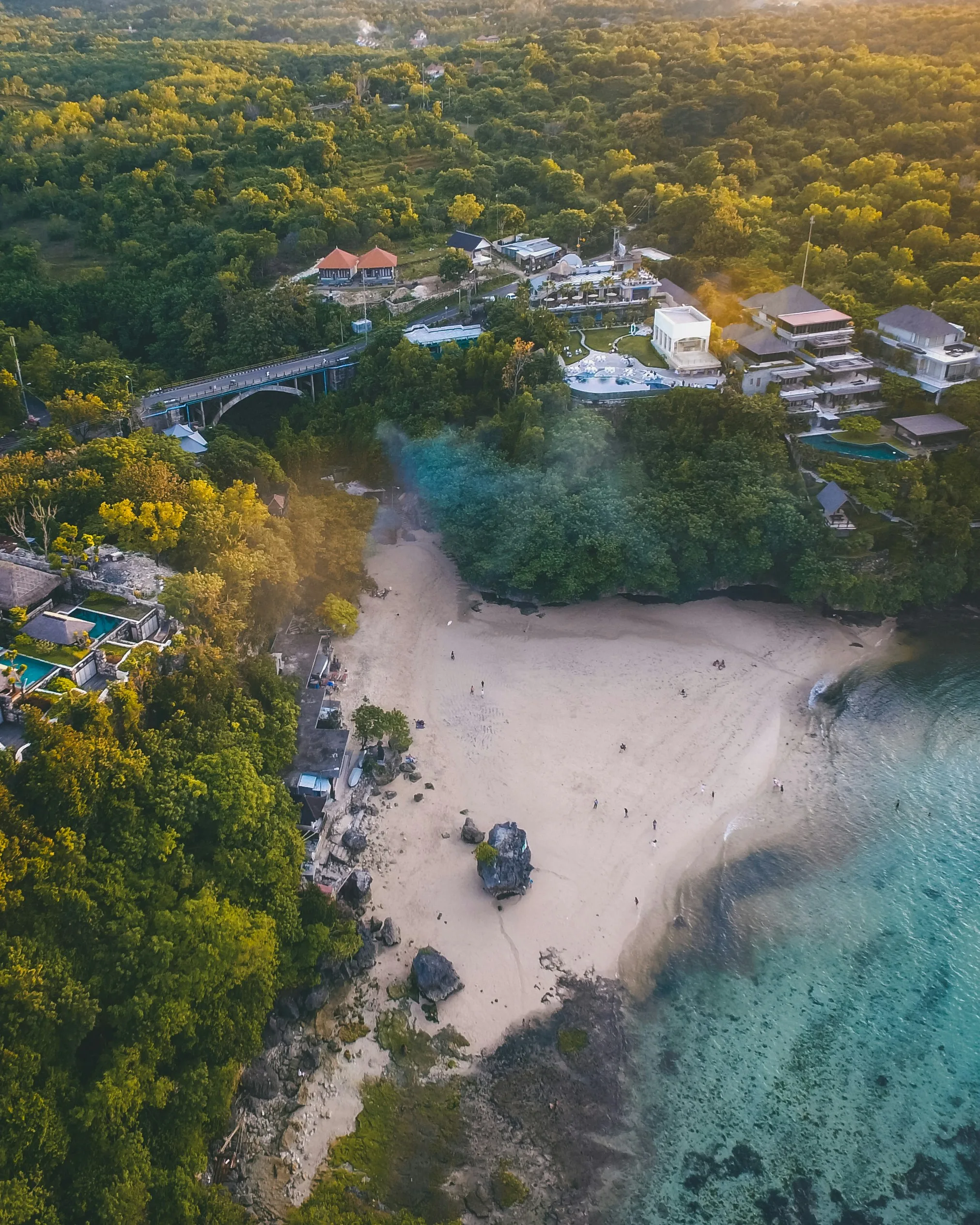
Uluwatu itself is not a beginner’s wave: it is powerful, crowded and breaks over shallow reef. But beginners can still learn on the Bukit with the right guidance. Book a lesson with a local surf school: instructors know which spots are safe on which days, and they often take beginners to softer waves such as small, high-tide days at Balangan or the inside at Padang Padang. Bali’s sandy beach breaks further north, around Kuta and Legian, are also classic places to learn, and many surf schools on the Bukit run trips there.
Once you can comfortably paddle out, catch green waves and get out of the way of other surfers, the cliff bars above Uluwatu are a great place to watch the best surfers in the world and learn just by watching.
Surf safety on the reef
- Check the tide. Many Bukit breaks get dangerously shallow at low tide. Use a tide chart and ask locals.
- Wear reef booties for the walk over the reef at Uluwatu and Bingin.
- Know your limits. If the waves look too big, they probably are. Watch for 20 minutes before you paddle out.
- Respect the line-up. Wait your turn, do not drop in, and give way to the surfer closest to the peak.
- Look after reef cuts. Clean them straight away with fresh water and antiseptic: coral cuts get infected easily in the tropics.
- Never surf alone on bigger days, and tell someone where you are going.
Where to eat after surfing in Uluwatu
Nothing makes you hungrier than a long session. After a morning in the water, come to CAVO on Jl. Labuansait in Pecatu, a short drive from Uluwatu, Padang Padang, Bingin and Impossibles. Lunch runs from 12 to 6 PM, Tuesday to Sunday, with generous, Nonna-sized plates: focaccia sandwiches on our house-baked focaccia, oval Roman-style pizza, fresh pasta and Italian salads.
Surfing the evening session? Everything on the lunch menu can be taken away, so you can order on WhatsApp at +62 813 2830 088 and pick up a focaccia on the way to the beach. Come back for aperitivo from 4 to 6 PM before sunset, and stay for live acoustic music on Thursdays and vinyl on Fridays. And if you are planning a rest day, see our guide to the best things to do in Uluwatu.

Surfing Uluwatu: FAQs
Is Uluwatu good for beginners?
Uluwatu itself is not suitable for beginners: the waves are powerful and break over shallow reef. Beginners should take a lesson with a local surf school, which will choose a softer spot, such as small days at Balangan or the inside at Padang Padang, or the sandy beach breaks around Kuta.
When is the best time to surf Uluwatu?
The best time to surf Uluwatu is the dry season, from about April to October, when south-east trade winds blow offshore and the most consistent swells arrive. June to August is the biggest and busiest; April, May, September and October have good waves with fewer crowds.
What tide is best for Uluwatu?
It depends on the break. The Peak and Temples are often best from mid to high tide, Racetracks on a mid tide (it is dangerous at low tide), and Outside Corner on big swells at lower tides. Always check a tide chart before you paddle out.
How do you get to the waves at Uluwatu?
From the clifftop above Suluban Beach, a staircase leads down to a cave. At higher tides you can paddle out from the cave; at low tide you walk over sharp reef first, so reef booties help. Watch where other surfers come back in before you paddle out.
Where can I eat after surfing in Uluwatu?
CAVO Bar & Bistro on Jl. Labuansait, Pecatu, a short drive from the main breaks, serves generous plates of Roman-style pizza, fresh pasta and house-baked focaccia sandwiches from 12 PM, Tuesday to Sunday, and everything can be taken away.