Most pizza dough is made in the morning and baked the same night. Ours is made two days before it ever reaches the oven. At CAVO, every oval Roman-style pizza starts with dough that has been fermented for 48 hours and is then stretched by hand. It takes more planning, more space and more patience, but it is the single biggest reason our pizza tastes the way it does. Here is what slow fermentation actually does, why it makes better pizza, and how to spot it on your plate in Uluwatu.
What is dough fermentation?
Pizza dough starts with four simple ingredients: flour, water, salt and yeast. Once they are mixed, the yeast starts feeding on sugars in the flour and releases carbon dioxide, which makes the dough rise, along with small amounts of alcohol and acids. At the same time, natural enzymes in the flour slowly break down starch and proteins.
Give that process an hour or two and you get dough that has risen. Give it 48 hours and you get dough that has developed: more flavour, better texture and a lighter bite.
Fast dough vs 48-hour dough
- Fast dough (a few hours): more yeast, a quick rise. It works, but the flavour is flat and bready, and the crust can be dense or tough.
- Slow dough (48 hours): less yeast and much more time. The dough rises gently, builds complex flavour and bakes up lighter and crisper.
- The trade-off: slow dough has to be planned two days ahead, needs space to rest and takes practice to get consistent. That is why many places skip it.
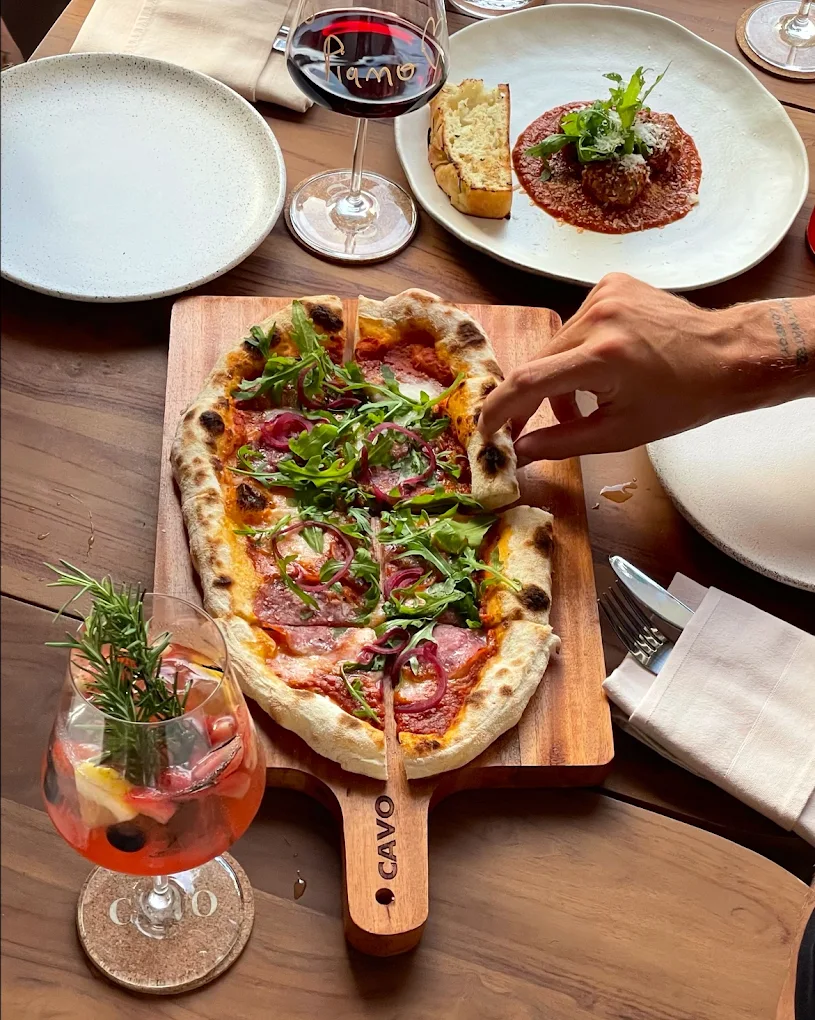
Why 48-hour dough makes better pizza
1. Deeper flavour
Time is an ingredient. As the dough slowly ferments, it builds flavour that a quick dough simply cannot: a fuller, slightly tangy, almost nutty taste in the crust. It is why the edge of a good slow-fermented pizza is something you actually want to eat, not leave on the plate.
2. A lighter, airier crust
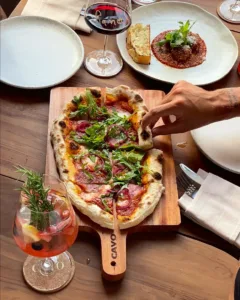
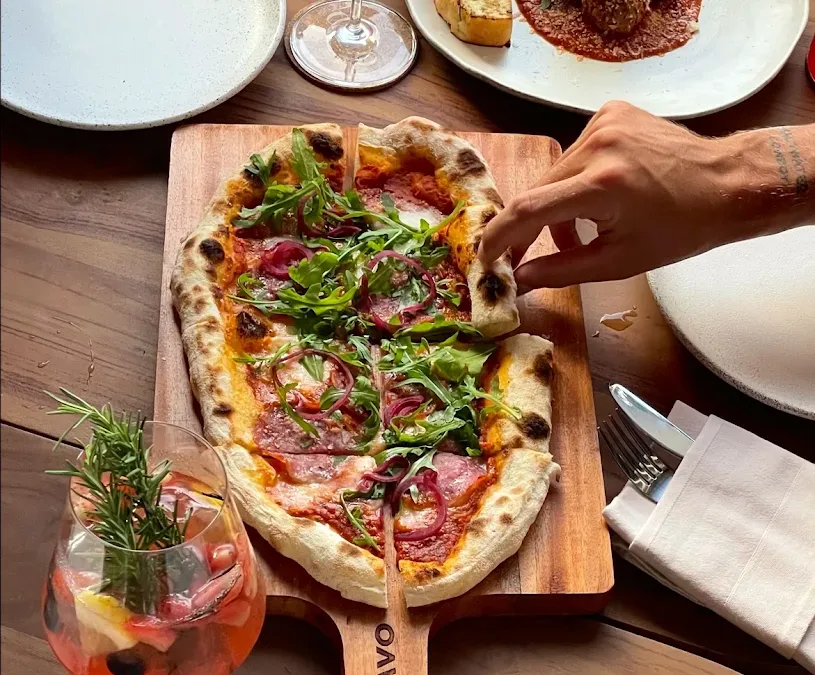
Slow fermentation fills the dough with small pockets of gas and gives the gluten time to relax. When it is stretched by hand rather than rolled, those pockets are kept, so the crust bakes up open and airy inside with a crisp base underneath.
3. Better colour and crunch
As the enzymes break starch down into sugars over those two days, there are more sugars available to caramelise in the oven. That means a golden, well-coloured crust and a better crunch.
4. It feels lighter
A lot of our guests tell us our pizza does not sit heavy in the same way, which matters when you are also ordering pasta and a second glass of wine. During long fermentation, the yeast and enzymes have more time to work through the starches in the flour, so many people find slow-fermented pizza easier on the stomach.
A note on gluten: long fermentation is not the same as gluten-free. Our pizza dough contains wheat and gluten, so it is not suitable for anyone with coeliac disease or a gluten allergy. We do offer gluten-free pasta on request for any pasta dish.
Why hand-stretched matters
Rolling pins squash the air out of dough. Stretching by hand keeps it in. After 48 hours, each ball of dough is stretched by hand into our signature oval shape, in the Roman tradition, so every pizza keeps the airy structure that two days of fermentation have built. It is also why no two of our pizzas are ever exactly the same shape. Read more about the style in our guide to Roman-style pizza.
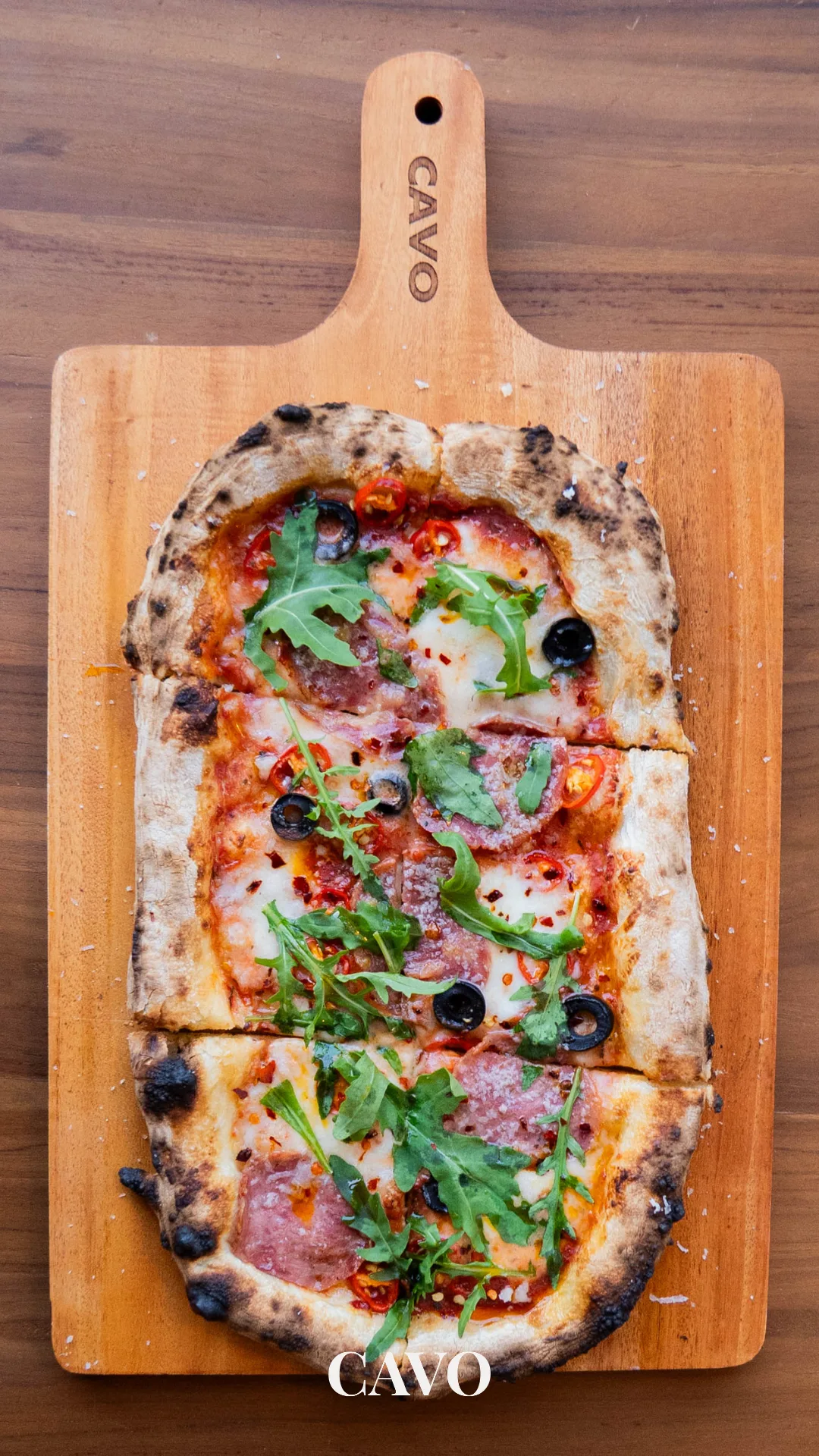
How it works in the CAVO kitchen
- Day 1: the dough is mixed from Frank’s family recipe, the one that came from Italy to Australia and now to Uluwatu.
- Day 2: it rests and ferments, slowly building flavour.
- Day 3: after 48 hours, it is portioned, stretched by hand into an oval, topped and baked to order.
Because the dough is always made two days ahead, our team is planning for the day after tomorrow every single shift. See what else happens behind the scenes in a day in the life of the CAVO kitchen.
How to spot a slow-fermented pizza
- Look at the crust: open, airy holes when you tear it, not a tight, bready crumb.
- Listen to it: a crisp base that crackles slightly when you cut it.
- Taste the edge: it should taste of something, slightly tangy and toasty, not just bread.
- Notice how you feel: satisfied, not weighed down.
Which CAVO pizza to try first
- Crudo e Burrata: our most-loved pizza, with prosciutto crudo and creamy burrata.
- Diavola Nera: salami, chilli and black olives, for anyone who likes a little heat.
- Margherita: the purest test of any dough. If the base is good, a margherita proves it.
- Cacio e Pepe: inspired by the classic Roman pasta of cheese and black pepper.
See every pizza on our food menu. Pizza is served at lunch from 12 PM, Tuesday to Sunday, and at dinner every night, and everything is available to take away. Thursday is Pizza e Spritz: see what’s on for the week.
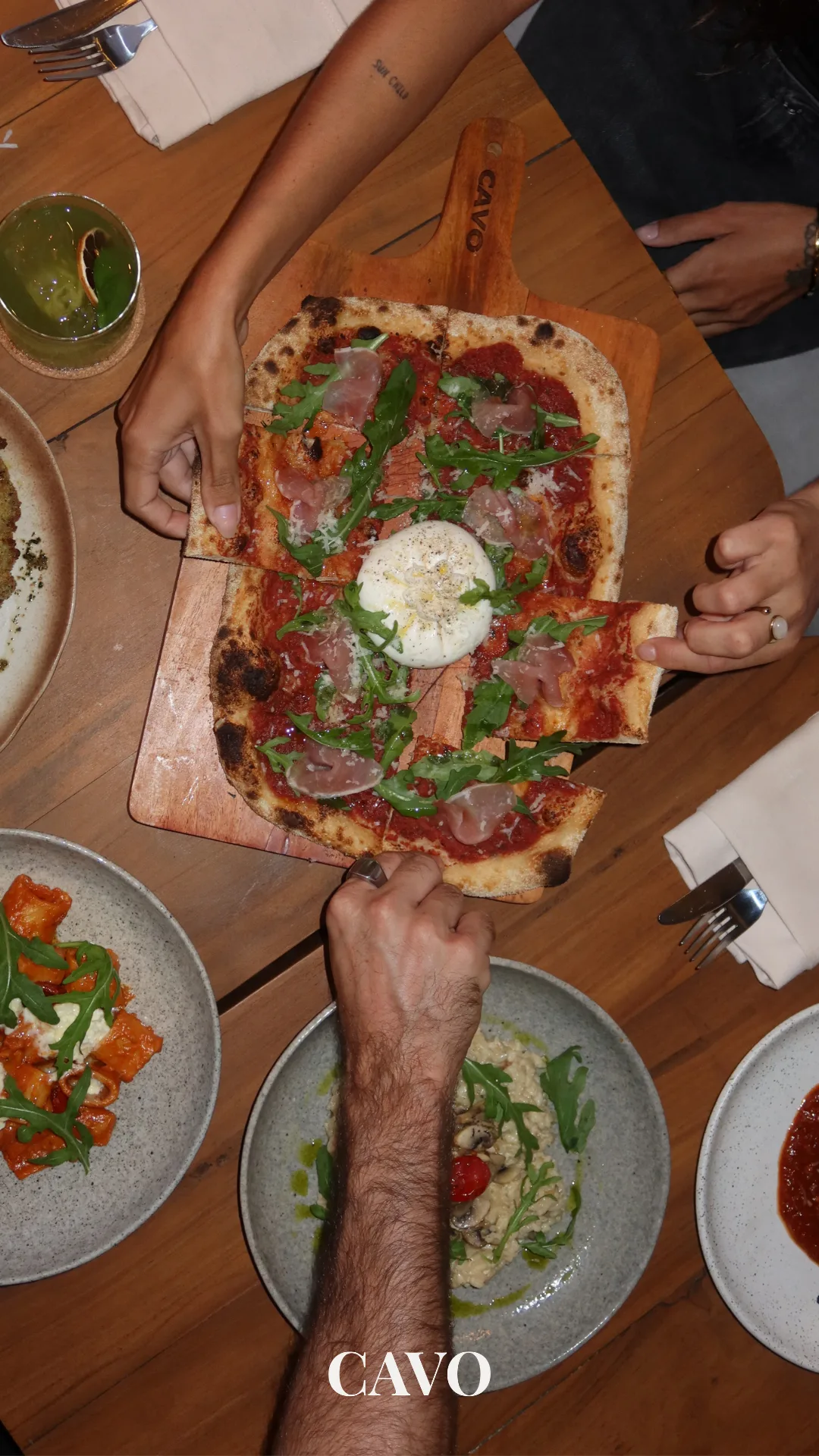
Want to try slow fermentation at home?
You do not need a pizza oven to taste the difference. Use less yeast than your recipe calls for, let the dough rest in the fridge for one to two days, and bring it back to room temperature for a couple of hours before stretching. Stretch it gently by hand, bake it on the hottest setting your oven has, and compare it with a same-day dough. You will not go back.
Or leave the planning to us. Our pizza dough is always ready, 48 hours in the making.
Or book through our reservations page. Walk-ins are always welcome.
48-hour pizza dough: FAQs
What is 48-hour pizza dough?
48-hour pizza dough is dough that is left to ferment slowly for two days before it is baked. The long fermentation gives the crust a deeper, slightly tangy flavour, a lighter and airier texture and better colour and crunch than dough made the same day.
Is slow-fermented pizza easier to digest?
Many people find slow-fermented pizza lighter and easier on the stomach, because the yeast and enzymes have more time to break down the starches in the flour. It is not gluten-free, though, and is not suitable for people with coeliac disease or a gluten allergy.
Is 48-hour fermented pizza gluten-free?
No. Long fermentation does not remove gluten. CAVO’s pizza dough contains wheat and gluten. CAVO offers gluten-free pasta on request for any pasta dish.
Where can I get slow-fermented pizza in Uluwatu?
CAVO Bar & Bistro on Jl. Labuansait, Pecatu serves oval Roman-style pizza made from a family recipe, with dough fermented for 48 hours and stretched by hand. Pizza is served at lunch from 12 PM, Tuesday to Sunday, and at dinner every night.
Why is hand-stretched pizza better than rolled?
Stretching pizza dough by hand keeps the gas bubbles created during fermentation, so the crust bakes up light and airy. A rolling pin presses that air out, giving a flatter, denser base.